


We have met the enemy and [s]he is…

.
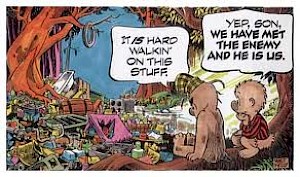
We have met the enemy and [s]he is…
We have met the enemy and [s]he is…
…NOT us!
The enemy - of established single-family neighborhoods in Bellingham - is the person who recently had this to say about the Sunset Commons rezone application for the former DOT property on the south side of Sunset Drive in the Sunnyland Neighborhood:
“You know, a lot of the feedback we got about this neighborhood proposal talked about multi-family not matching the existing development pattern. I understand the concerns about neighborhood character. I really, really do.
“We have the pressure of trying to figure out how to accommodate population in all of our neighborhoods, including Sunnyland.
"So we have to figure out what we’re going to do when opportunities like this [application for increased density and multi-family zoning] present themselves in a single family neighborhood.
“And, to be perfectly honest, the argument that multi-family doesn’t match the existing development pattern is the number one reason to consider multi-family - because we have to put some multi-family in single family neighborhoods. Not everywhere in them, and not unilaterally; sensitively and thoughtfully, but we do have to consider that for the livability of all of our neighborhoods.”
So, let’s break this down:
First, instead of focusing on the “vitality and character of established residential neighborhoods,” our enemy chooses to focus on the “existing development pattern.” Huh? Since when is the existing development pattern equivalent to the vitality and character of a neighborhood?
Second, when our enemy talks about the “pressure of trying to figure out how to accommodate population,” exactly what pressure are we talking about? In terms of accommodating population, does the GMA require the city to do any more than to “identify sufficient land for housing?” [RCW 36.70A.070(2)]
Is our enemy claiming that the city has not identified “sufficient land for housing?”
Really? Then wouldn’t our Comp Plan be out of compliance with the Growth Management Act (GMA)? Is it?
Third, our enemy acts like a developer’s application for an upzone to increase density and allow multi-family development is such a rare and unique thing. What? Aren’t these “opportunities” presented on a regular basis? And doesn’t our Comp Plan already comply with GMA requirements whether or not rezones are applied for and approved? Are density and multi-family upzones actually required for the city to meet its GMA obligations? If not, then where is this pressure coming from?
Fourth, our enemy claims that “the argument that multi-family doesn’t match the existing development pattern is the number one reason to consider multi-family.” Really? The # 1 reason?
Is it possible that our enemy is not familiar with the March 1995 State Senate Bill (SSB) 5567 that amended the same section of the GMA requiring the city to “identify sufficient land for housing?” You know, the same bill that admitted that the GMA wasn’t working? The bill that stated,
“There is concern that these [GMA planning] requirements not only do not adequately protect single-family residential neighborhoods, but increase pressure to rezone established single-family neighborhoods to allow development of apartment buildings and commercial uses.”
So, what did the legislature do? They amended the GMA to require that the housing element of the Comp Plan ensures the “vitality and character of established residential neighborhoods” so as to “protect single-family residential neighborhoods” and prevent the pressures described by our enemy from wrongfully causing “our leaders” to rezone “established single-family neighborhoods to allow development of apartment buildings and commercial uses.”
Is our enemy not familiar with SSB 5567 and the GMA?
What gives?


9 Comments