


Self-Determination or Self-Defeat?

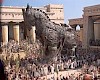
Meet DADU, Bellingham's Trojan Horse .

Self-Determination or Self-Defeat?
Self-Determination or Self-Defeat?
“Is it ignorance or apathy? Hey, I don’t know and I don’t care.” - Jimmy Buffett, in a moment of joyful clarity after a few margaritas.
[IMPORTANT UPDATE: The December 7 Planning Commission Public Hearing on the ADU Ordinance update has been canceled. The hearing has been rescheduled to January 25 at 7 pm.]
Hello? Hello?! Is anybody out there? Are you paying attention?
Nine years ago, on back-to-back days in August 2008, I posted two articles on Northwest Citizen: Is anybody out there? and Jimmy Buffett, philosopher. In the first, I confessed that I hate writing articles for NWC and lamented the lack of genuine community dialogue. In the second, I expressed my concern that apathy undermines neighborhood self-determination and leads to self-defeat.
Can we get a little help for Jimmy here? Do we not know? Or do we not care?
Or does intent play a role?
Fiction or Nonfiction?
Rick Sepler, upon taking over as Bellingham’s newest Planning Director, posted a narrative on the city’s website entitled, Preserving Bellingham’s unique sense of place. Rick wrote:
“Memorable communities have a uniqueness that separates them from the cookie-cutter collection of spaces that characterize much of modern America… The art of planning is to preserve, in the face of change, those special qualities that contribute to a community’s unique sense of place... As a planner, I believe that no one knows a community as well as the people who live and work there.” (Emphasis added.)
But did Rick mean what he said? Or is this simply a beautifully written piece of fiction? Perhaps the answer depends less on Rick’s intent than our own.
Neighborhood Intent
What is our intent? Is it our deepest desire to be Ballardized, to suffer the failure of the upzoning reform now underway in and around the places we call home?
Is it our goal to surrender any sense of self-determination and hand over our fate to bureaucrats who claim they care about your “sense of place” but lack the integrity to do as they say?
Is it our dream to become just another “cookie-cutter collection of spaces” - to be torn down, bulldozed, and gentrified?
Do we prefer grassroot, bottom-up, organic visioning? Or top-down, unimaginative, boiler-place directives?
Why YOU Matter: Representational Government & Critical Mass
Rick Sepler understands that “no one knows a community as well as the people who live and work there.” But what good is your knowledge if it remains latent? How can we inform the people we elect to represent us, and hold them accountable, if we fail to communicate with them?
In many ways, governmental decision-making is impacted at the margin, a game of Political Final Straw. You matter because any one of us has the potential to be the straw that the breaks the proverbial camel’s back, the comment letter during a worksession, the testimony at a public hearing, or the signature on a Referendum Petition, that ultimately preserves Bellingham’s livability.
But that Final Straw is predicated on a critical mass of others who share common ground and purposefully unite. The Final Straw represents the cumulative effect of small actions taken by a critical mass of people with a mutual vision and shared goals.
RIP Neighborhood Planning?
Is neighborhood planning dead? Has the future of our neighborhoods been co-opted? Can we learn from the failed upzoning reform in Ballard to chart a different course? Do we recognize the DADU Trojan Horse for what it is?
If you’ve been paying attention, then you know we have a Runaway Planning Commission (PC) that has badly – and boldly - derailed. While we were distracted with life, they have taken over the reins of planning for the neighborhoods and have stolen whatever little power and influence we had over the process. If neighborhood power isn’t already dead, it’s certainly on life-support.
Do You Know? The DADU Trojan Horse
The issue du jour is an update of the city’s ADU (accessory dwelling unit) ordinance. Boring, right? Inconsequential? Meaningless?
Sure, but for those who’ve been paying attention (not me until recently, but people I know), it was understood that the ADU ordinance was the city’s opportunity to stick their nose inside your neighborhood’s tent. To offer their Trojan Horse loaded with all sorts of Weapons of Neighborhood Destruction (WND).
One of these seemingly benign weapons is the detached accessory dwelling unit, or DADU, affectionately known as the “backyard cottage.” DADUs are one of the nine Infill Toolkit housing forms that are currently not allowed in existing single-family residential zones.
When the city’s Infill Housing Toolkit was established in 2009, the city committed that toolkit forms could be added to single-family zones if a proposal was submitted by the neighborhood, property owner, or developer and a Type VI legislative process with public hearings was followed. This neighborly commitment ensured that changes would be done incrementally, not citywide, and that our “unique sense of place” would be preserved.
Breaching this commitment, our runaway PC has straw-voted to recommend that DADUs be legalized in ALL established single-family zones CITYWIDE. The ordinance that staff is drafting will include language that codifies this straw-vote.
And once DADUs are legalized in all single-family zones citywide, the DADU Trojan Horse will ensure that all other Infill Toolkit housing forms are as well. Next weapon: Citywide Upzoning Reform – the CUR DOG birthed from the bowels of the DADU Trojan Horse.
At the PC public hearing, which was originally scheduled for December 7 but has been moved to January 25, PC members will hear testimony on the ADU ordinance update, including the DADU Trojan Horse, and will vote on their final recommendation to Council.
Do You Care?
Neighborhood self-determination is predicated on both knowing and caring - and ultimately on taking action.
The city’s agenda, their undisputed plan, is to kill neighborhood planning. To destroy any neighborhood self-determination. This is true not only in Bellingham but in cities up and down the I-5 corridor and beyond. You don’t need a crystal ball to foretell this dystopian future.
More than two centuries ago, George Washington warned, “The people must remain ever vigilant against tyrants masquerading as public servants.”
Are you prepared to be vigilant?
How can YOU make a difference?
Major changes to the city’s regulations that impact neighborhoods require legislative decisions by City Council and follow a Type VI legislative process described in Bellingham Municipal Code (BMC) section 21.10.150.
This process includes worksessions and public hearings by both the Planning Commission and City Council, which provide at least four opportunities for engagement: PC worksession, PC hearing, Council worksession, and Council hearing.
Citizen engagement includes submitting comment letters to the PC and Council, and providing oral comment at the worksessions and oral testimony at the public hearings.
Citizen engagement also allows for one-on-one dialogue with members of both the PC and Council, which is perfectly legal for legislative processes, unlike quasi-judicial ones.
And, if all else fails, Article X of the Bellingham Charter provides citizens with two powers of Direct Legislation: Initiative and Referendum.
If the city adopts an ordinance that will destroy Bellingham’s livability, a final engagement opportunity is a simple signature on a Referendum Petition, which refers the ordinance to a citizen vote. Together, with 1269 qualified voters, we can create an inexorable force of Armchair Legislators.
Ideally, a critical mass of those sharing common ground would participate at every PC worksession, PC hearing, Council worksession, and Council hearing. For the ADU ordinance update, a number of engaged citizens have already participated at PC worksessions, but certainly not enough.
The PC public hearing on January 25 at 7:00 pm is a critical moment. If you have any desire to influence the destiny of your neighborhood and Bellingham’s livability, NOW is the time.
How can YOU become informed?
It is impossible for any one person to know all there is to know about any of these planning issues. And, considering the DMV Principle, whereby individuals are easily Demonized, Marginalized, and Villainized, it’s beyond difficult for an individual to have the type of influence that a critical mass can achieve.
The only chance we have is to organize, organize, organize.
Having participated as a neighborhood advocate for more than a decade – and having had some success – I have found it is much more effective, and far more enjoyable, to advocate alongside friends who have a shared vision and common goals.
The Bellingham Neighborhood Coalition
More than a year ago, several friends formed the Bellingham Neighborhood Coalition (BNC) and developed a three-pronged, straightforward mission to: (1) help single- and multi- family neighborhoods preserve their vitality and character; (2) promote urban villages for future infill; and (3) ensure existing residents and taxpayers are not unfairly burdened with the costs associated with growth and development.
In my opinion, BNC is our best chance for neighborhood self-determination. People who are involved with BNC have participated in these planning issues and processes for decades. They are informed, welcoming, interested in sharing what they know, and devoted to preserving Bellingham’s livability for generations to come.
On Wednesday, November 15, BNC held its first public event – the Don’t Ballardize Bellingham premiere followed by a community-wide dialogue. More than 100 people requested reservations for the 80 available seats and, although there were a few cancellations, a full house enjoyed a genuine citywide conversation.


7 Comments