


Legislation By Anecdote - Accessory Dwelling Units in Bellingham
.
Legislation By Anecdote - Accessory Dwelling Units in Bellingham
Legislation By Anecdote - Accessory Dwelling Units in Bellingham

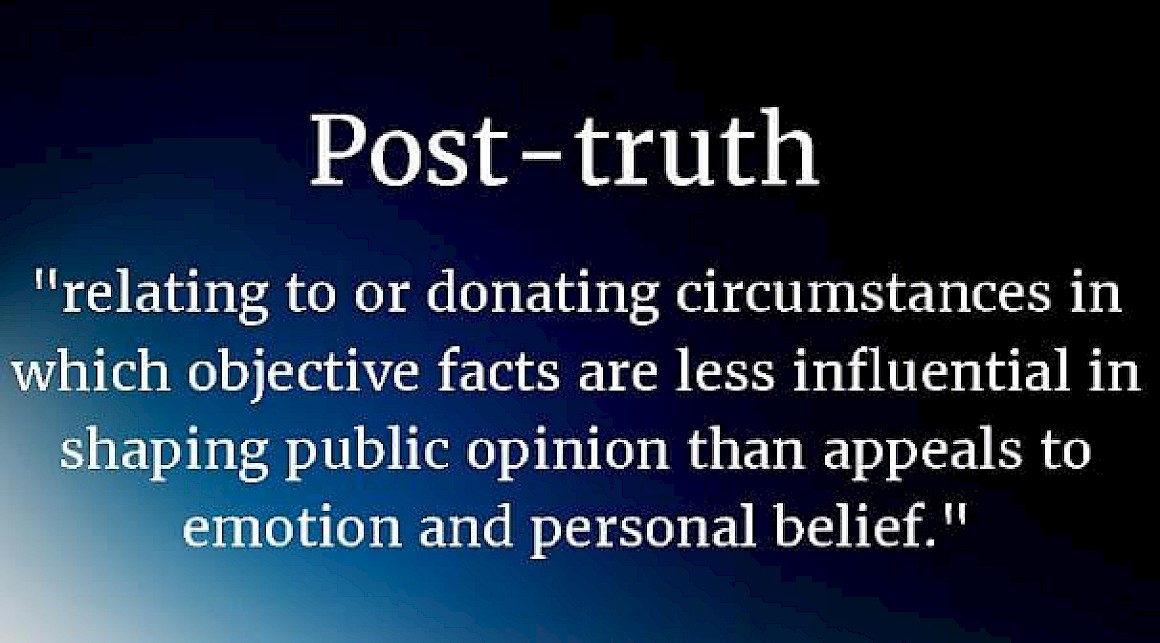
“It was no accident that the Oxford Dictionaries’ word of the year in 2016 was “post-truth,” a condition where facts are less influential in shaping opinion than emotion and personal belief. To adopt post-truth thinking is to depart from Enlightenment ideas, dominant in the West since the 17th century, that value experience and expertise, the centrality of fact, humility in the face of complexity, the need for study and a respect for ideas.” Michael V. Hayden
It is a rare moment when I look to the former Director of the Central Intelligence Agency and the National Security Agency for an appropriate quote, but present times call for logic from any source. Having been an intelligence analyst for decades, I have to stick to the facts. Unfortunately, in our spasmodic sausage-making legislative process, anecdotes with appeals to emotion have taken over.
The self-identified YIMBYs (Yes In My Backyard) adopted a playbook that distorted the recent accessory dwelling unit (ADU) ordinance update by inserting appeals to emotion, rather than fact. They used this approach to create the not-so-subtle impression that those who would oppose their stance on ADUs were the bad guys and worse: exclusionary, racist, privileged, gray-haired, white and villainous.
This tactic arose early in the public ADU debate with the appearance of the strategy document Bellingham Housing Affordability and Livability Working Assessement + Proposal from the office of the Associated Students (AS) at Western Washington University. The paper states, “Assessing the problem before moving to solutions makes sense. In our case, the problem has already been assessed; a shortage of affordable housing units.” I beg your pardon; such a statement is not an assessment of the problem, it merely states the problem. The problem remains one of “discovery.” We need a method of evaluating the contributing factors and THEN devising measurable actions to realize stated goals and achieve an end: affordable housing. Even then, “affordable housing” must be defined or we end up in a circular argument. Interestingly, at no time did the Associated Students mention that their own university was complicit in creating the housing crisis in the city by not building any on-campus dormitories for over 40 years in spite of increasing enrollment by 50% over that time. So much for assessing the problem and its origins.
The Associated Students “assessment” then reveals the tactic of the “steamroller,” an “unapologetic YIMBY, who fights for our values, holds elected officials accountable, pushes the progressive frame [bolding mine] and is unwilling to compromise.” And who is it that determined “our values?” Those values arose from the FIRE Sector (the Finance, Insurance and Real Estate industries) and from public relations outfits like the Frameworks Institute whose mission is to frame public discourse on policy issues. In this case, the Associated Students reframed the issue to their own benefit by crafting language that tugs at the hearts and souls of responsible citizens while avoiding the drudgery of working with facts.
The problem is that neither the Associated Students nor the YIMBYs even realize they have been co-opted and duped by such “value based” messaging. Who can resist a message ostensibly viewed through an “equity lens?” You can do anything in the name of equity. And heaven help those who oppose; those people become, as mentioned above, “exclusionary, racist, privileged, gray-haired, white and villainous.”
Many of these dubious tactics flow from the usually liberal Sightline Institute in Seattle, an organization that emphasizes sustainability, and one that you would probably not guess supports YIMBY groups that are determined to “build our way out of our housing availability and affordability problems.” The Sightline website offers to guide users with a number of what they call “flash cards.”
“…Flashcards are quick reference tools for effective communications strategies. They’re messaging memos distilled from experts and savvy communicators—to help you do your job and save you time. The Flashcards focus on values-based communication: strategies for talking about important policies or issue solutions in terms of shared values.”
One Flashcard entry suggests, “Data and research cannot be the message [bolding mine], rather, they should enhance and support a compelling alternative narrative.” The tactic is to reframe the issue for support of the agenda and not bother with facts regarding the specifics of where ADUs, or any other housing types for that matter, may have worked to achieve the desired ends.
Which brings us to the ultimate question: Where have ADUs worked to substantially affect the affordability or availability of housing? The answer is: nowhere. Talking points usually feature places where ADUs are being built, but there is no mention of their effectiveness in achieving any sort of measurable goal. Bellingham’s ADU Opportunities/Concerns matrix, developed by city staff as a comment tracker on the ADU ordinance review, responds to several comments by saying that ADUs are authorized in a number of different cities. What is not stated is whether the authorization of such ADUs is solving an identifiable problem. The French call this tactic “poudre aux yeux” (powder in the eyes). Dust off the matrix before reading.
As we continue our slide down the legislative razor blade this year, we will be confronted with several other land and zoning issues. The opposition or questioning of these will certainly occasion more reframing designed to vilify and divide. Updates to the subdivision ordinance, the re-look at “Infill Tool Kit” ordinance, the problem of illegal rooming houses, and the controversial vacation rental ordinance are each ripe for those wearing fogged-over equity lenses that lead them to stumble about, flailing for solutions to specific problems that have not been studied. Goals, actions, performance measures and review processes are, for all intents and purposes, non-existent. The cruel joke is on those who believe they are helping, or will be helped, by this reframing process as opposed to a well-planned and specifically articulated one.


8 Comments