


From the Political Junkie: A Petree-Eye View of Downtown

Clayton Petree: a Man, a Plan, Lots of Comprehensive Planning Data Sheets .

From the Political Junkie: A Petree-Eye View of Downtown
From the Political Junkie: A Petree-Eye View of Downtown

Editor’s Note: An interview is not an endorsement. The Political Junkie urges people to read his Expanded Voter’s Guide for more information on how to vote. As usual, read this post on its native site to see all the embeded images. Finally, my apologies for any misquotes or incorrect facts, I was flying without my pen and paper today.
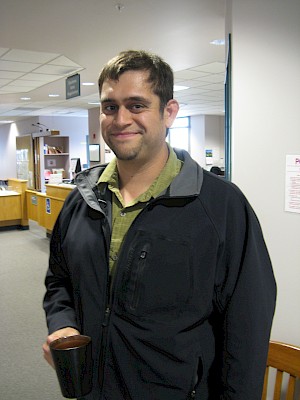
For a man who’s future is being decided in one week by 80,000 people, Clayton Petree is remarkably calm. “Aside from the sleepless nights, I’m not worried at all.” He joked. We met at the Black Drop downtown for an interview about his independent campaign for the mayor’s office of Bellingham. He is joined in that race by Kelli Linville, Stephen Moore, and incumbent Dan Pike. Not content to just sit and talk, Clayton hops up to lead me on a tour of the city, highlighting what he sees as our biggest challenges.
Our first stop was a view of Old Town. From here, he points out the shifting boundaries of where Old Town is and has been. He gets right down to business. “We need infill. The neighborhood is ready for it, but no developer will break ground because it is not profitable.” He cites the city’s goals in their comprehensive plan. “According to the City’s own plan, we are going to add 70 residences each year, every year in the next decade. That is a great deal of new construction.” He talks about the various requirements imposed by the city and general safety, but gets back to the main point. “I think most people have the same goals for Bellingham. We all want to see our economy grow and our city to be successful, but you can’t do that without some change.” Petree sees parallels about the outsized expectations of infill, and the lack of actual development. “It just isn’t coming together.” Here’s a recent Herald article about just this concern.
Noting that I am Generation Y, he spoke to how many people my age are living with their folks, because there are no reasonably priced rentals. “I don’t believe in universal home ownership. I think if we can get a roof over peoples' heads right now, while things are tough, that accomplishes that goal.”
Right now, the available rentals in Bellingham are at a critical low with barely a 1.6% vacancy rate, especially compared with the healthier 4.5% statewide. “We need to expand the capacity of our city. How can we expect people to move here, start businesses, and thrive if they don’t even have a place to live?” He noted that the building that used to stand where Walton Place is now needs to be considered when talking infill. “What did we replace, one story? Two stories? We aren’t gaining enough ground, often we are just treading water.”
On our way to the next stop, Clayton talked about living in the Lettered Streets. “That neighborhood has changed so much in the last couple of decades. When I was growing up, I had a paper route on F Street and it was a rough neighborhood. Drug dens, party houses, but it has really turned itself around.” As a cleaner, safer neighborhood, it is ripe for building up, and filling with people.
“What about landlord licensing?” I ask. Clayton thinks for a moment. “That is really aimed more at health and safety concerns than planning for communities. We have codes on the books about how many people can live in a space, and what makes sense. What we need is some way to better enforce them.” When I ask him how, he shrugs, “I don’t have all the answers, but I know as mayor, I would work to address these problems.”
We reach the construction site across from the Market Depot. He noted that city planners have this space zoned for two seventeen-story towers. I said it didn’t really look like they were going to build that. “Again, another example where our plans and reality don’t seem to line up.” He points me toward Part 4 of the Comprehensive Plan that talks about Bellingham receiving 62% of our county’s growth, yet in actuality it is closer to 10-20%. “Imagine you manage a business, most of your customers are coming down from Canada, do you set up your store inside the city limits, with all the restrictions and impact fees in place? Or do you move it a few miles north?”
I ask him if we should just do away with all those restrictions. He quickly responds, “Impact fees pay for the roads and if you are driving on the roads, you should be paying them. It isn’t fair that those who live in the county and commute in do not pay for what they are using.”
So are you a Republican or a Democrat? Clayton cracks a big smile, “I’m an independent. I just see things that need to be fixed and I think my experience with land use, planning, and all this stuff,” he waves his pile of staff reports at me, “gives me an advantage.”
What about the Waterfront? "There are so many other things we need to fix first, and the cost for the waterfront is going to be so steep, we need to build up our neighborhoods, like Old Town, first before plowing into the Waterfront."
What happens if you don’t make it? Clayton smiles. "Ken Mann said he wouldn't run again after he lost and look where he is now. I don't know, I'm going to leave that door open."
THE POLITICAL JUNKIE ANALYSIS: Clayton Petree is a bit of a cypher. Between placing ads in the Betty Pages, advocating for a bus-accessible downtown, and working to prevent sprawl in the county by encouraging infill, he would seem to fit in with my values, but then again, his thoughts of removing barriers to development makes me nervous. My biggest impression after our interview is that Clayton is clearly a Wonk (not a Hack), a man used to dealing with minutia and committed to changing our city. Regardless of how next week's primary turns out, I'm excited to see Clayton continue to be involved in the discussion.


6 Comments