


Obscuring Hospital Policies
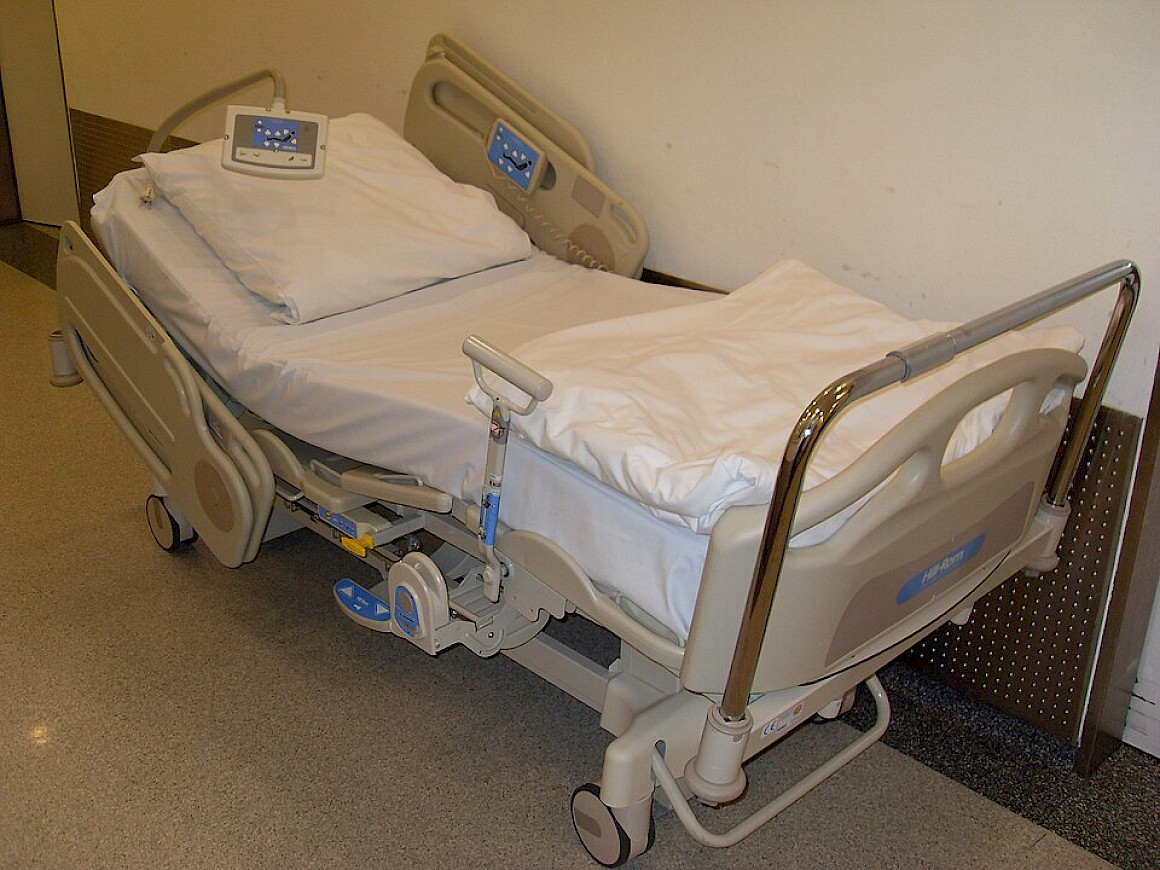
Behind and under that hospital bed.

Obscuring Hospital Policies
Obscuring Hospital Policies
This article is a collaboration between Dolores Jordan and EJ Ledet.
Did you know Bellingham’s Emergency Room is staffed by a firm owned by Blackstone, a hedge fund?
Did you know that in February of this year, PeaceHealth attempted to outsource the Eugene Emergency Physicians group, a local group that had been with PeaceHealth for 35-years, replacing them with another nation-wide contractor?
How about that insurers often deny doctor-recommended care by using prior authorization requirements, which cause critical delays, staff frustration, and costs us all about $93 billion in paperwork a year?
Were you aware there are three pharmacy benefit managers that control about 80% of U.S. prescriptions? They were recently sued by the FTC (2024) for inflating insulin prices.
Our system is broken.
Most people only think about how hospitals work when something goes wrong. By then it’s too late to ask the questions that matter most: Who made this decision? Who paid them to make it? Who was supposed to oversee it? And who is accountable when patients are hurt?
Hospital transparency is crucial because our health, safety, and lives depend on decisions these administrators are making. When information is hidden or too complicated to understand, people have no control in a system their lives depend on and are forced to blindly trust that it is working in their best interest. But trust is built on transparency and clear communication.
We have identified four main issues with PeaceHealth St. Joseph that we’d like you to consider. It’s literally a matter of life and death.
The first is that the watchdog is being paid by the watched. The Joint Commission, which accredits U.S. hospitals, is paid for by the same hospitals it inspects. Anytime an inspector’s paycheck comes from those being inspected, independent oversight is non-existent. No accreditor paid by a hospital is likely to find anything hospital leadership prefers not be found. The solution here is easy: hire independent oversight. Accreditation must be funded from outside the institutions being inspected.
Another big issue is that we have no local participation. PeaceHealth St. Joseph is the only major hospital for Whatcom County’s 230,000+ residents, yet only one of the eleven system board directors lives in Bellingham. Even at that, our local Community Health Board is toothless and does not participate in hiring our CEO, setting their pay, or approving hospital budgets. These directors are all appointed by PeaceHealth, and these boards have no public meetings, no published minutes, and no recall ability. Again, the solution is relatively easy: Community health boards should have public meetings and publish their minutes, agendas, recorded votes, and annual conflict-of-interest forms.
Third, pay must be tied to outcomes, not margins. This is a big one. In 2021, PeaceHealth’s outgoing CEO earned roughly $6.2 million. Former PeaceHealth CEO Alan Yordy, was rewarded with a $3.8 million post-retirement payout. A PeaceHealth tax filing figure shows $17 million in total executive compensation. It would seem obvious that if bonuses reward margins, leaders will chase margins — regardless of staff layoffs, Emergency Room outsourcing, or even withholding charity-care.
Yes, withholding charity care. In 2023, Washington’s Attorney General secured a multi- million dollar settlement against PeaceHealth. refunded $13.4 million to more than 15,000 low-income patients because of the hospital’s failure to even screen for charity-care eligibility. PeaceHealth is a Catholic, non-profit hospital system; the public needs to ask whether its religious, tax-exempt, charitable “mission” is being honored…or exploited. Something has clearly gone very wrong.
Aggravating the problems caused by margins vs. patient outcomes are Non-Disclosure Agreements (NDAs). No doctor or nurse should ever be required by their hospital to sign an NDA. Medical professionals must never be contractually prevented from raising patient-safety concerns. If bonuses are available, they must be tied to safety, charity-care compliance, infection rates, clinician retention, and ER wait times — not just financial margins. Further, the formulas for these bonuses must be publicly available.
Finally, we need public accountability. Whenever a hospital is the only one in its community, the county council should receive regular public reporting. As a privately owned health system, unlike a public hospital district, PeaceHealth has no requirements regarding elected commissioners, or compliance to open-meetings laws, or publicly related recall systems.
There are many tools available that would improve our health-care system and they are all related to transparency: public reporting on wait times, boarding hours between the ER and hospital admission, ambulance diversions to other facilities, non-physician decisions that override a doctor’s admission orders, a public record of board votes, a public comment period before meetings, public disclosure of any AI tools used to influence triage, admission, discharge, or staffing levels.
The bottom line is It does not have to be like this. Remember that attempt to outsource Eugene’s ER staff? On May 6, 2026 — hours before federal court arguments under Oregon’s SB 951— PeaceHealth reversed the Eugene ER decision after a 6,800-signature petition and a protest letter from 60 of its own clinicians. Once the public could see what was happening, sunlight worked.
A community hospital should not be something the public is expected to trust blindly. The public must be able to understand, question, improve, and hold their community hospital accountable, because without accountability, patient safety suffers and people die.


