
From the Political Junkie: The Presidential Primary and Florida
.
From the Political Junkie: The Presidential Primary and Florida
From the Political Junkie: The Presidential Primary and Florida

Aside from campaign finance reform, the biggest effect on a presidential race is the order in which states vote. Ever since Jimmy Carter swept the Iowa caucus, a move that propelled him onto the national stage and into the White House, the order of elections has been supremely important in determining the final nominee and ultimately the presidency.
So imagine my general unease when I learned that Florida is considering moving up their primary date before Iowa's, the first scheduled primary in the nation. In 2008, Florida tried the same thing, along with Michigan, and it led to their votes being somewhat invalidated at the national party headquarters. That, in turn, then pissed off a whole slew of voters who had bothered to turn out.
Right now, the schedule goes: Iowa, New Hampshire, Nevada, South Carolina . . . then everyone else. Breadbasket, New England, Rocky West and Deep South. If you were looking for variety in voter flavors, that's a pretty good mix. Not my favorite, but a pretty good mix. I'm not certain about the Republican side off the top of my head, but it provides some variety in the contests on the Dem's side. Iowa and Nevada both use the caucus system, where groups of voters meet in a school gym, and allocate votes by who shows up. New Hampshire and South Carolina use a standard ballot box method. These states do have one thing in common, they are all medium-sized states with relatively cheap media markets. In short, television and radio, while expensive, don't break the bank here.
Now, these states are going to fight like the dickens to keep their "first in the nation" status. But let's say for a moment that after all the hub-bub they don't get their wish and Florida is placed with the other top four primary elections. What then? Well, let's look at Florida. It is a HUGE state with tons of population. And because they have a ballot-box primary, candidates would need an incredible ground-game to turn people out. Also, they have one of the most expensive media markets in the nation. A television ad buy in Miami costs more than I'm probably going to make in the next decade. Campaigns would need to POUR money into field offices and media ads. To fund this, they would have to hold many, many more fundraisers. Outsiders and long-shot campaigns without national name recognition would have a very difficult time breaking into the field.
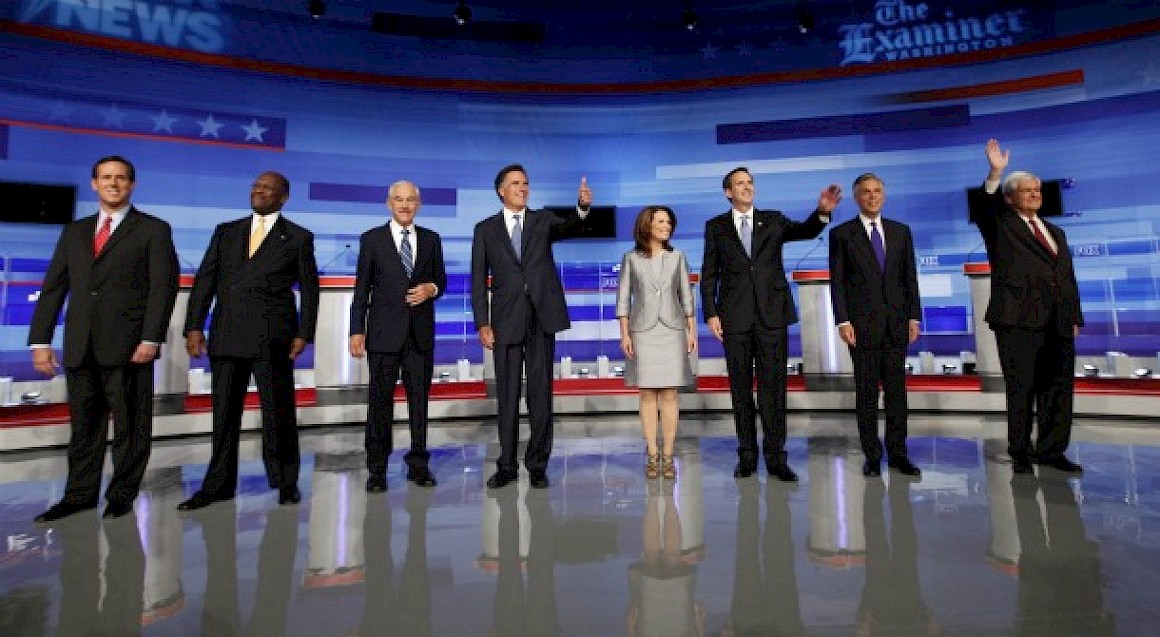
With the present cast of characters running for the Republican nomination, this move would most definitely help Mitt Romney. Romney has had a difficult time with the GOP evangelical base and the Tea Party, two groups that are pretty influential in the Iowa Caucus. His strength has been senior citizens and moderate Republicans, of which Florida has plenty. Also, Mitt has been the strongest fundraiser in the field, raising gobs and gobs of money, which would easily allow him to thump Rick Perry or whatever opposition candidate is left standing. Bachmann, Huntsman, and yes, even Herman Cain, would have a great deal of trouble competing because of their lackluster fundraising and poor name recognition.
So is this good or bad? I'm troubled by anything that makes it harder for poor candidates to get nominated. On the other hand, we want to know if our person can fundraise before they step into the ring with the opposition. Part of the reason Huckabee had trouble taking off in 2008 was his poor fundraising skills. (However, he ran a very cheap campaign and did well with how he spent his money, tip of the hat.) I think if this change happens this year, you can count on Mitt Romney standing at the podium across from Barack in October. But if it doesn't, Perry still stands a good chance.


1 Comment